
The Watermark Isn't for the Regulator
Most legal problems are fixable. Expensive and annoying, but fixable. You can paper an assignment you forgot. You can clean up a cap table. You can renegotiate a bad contract at renewal.
Authorship isn't fixable. You cannot retroactively author something. Either a person made a creative contribution and there's a record of it, or there isn't. No amount of money in year four can buy back a decision nobody documented in year one.
That asymmetry is the argument. Keeping the record costs almost nothing: attribution you're already generating, logs you're already producing, one afternoon testing what your pipeline strips. Not keeping these records costs you the ability to answer the only question that matters, at the exact moment who wrote your code is worth money.
Three Years Later, The Copyright Office Is Still Wrong (And Now Founders Are Paying For It)
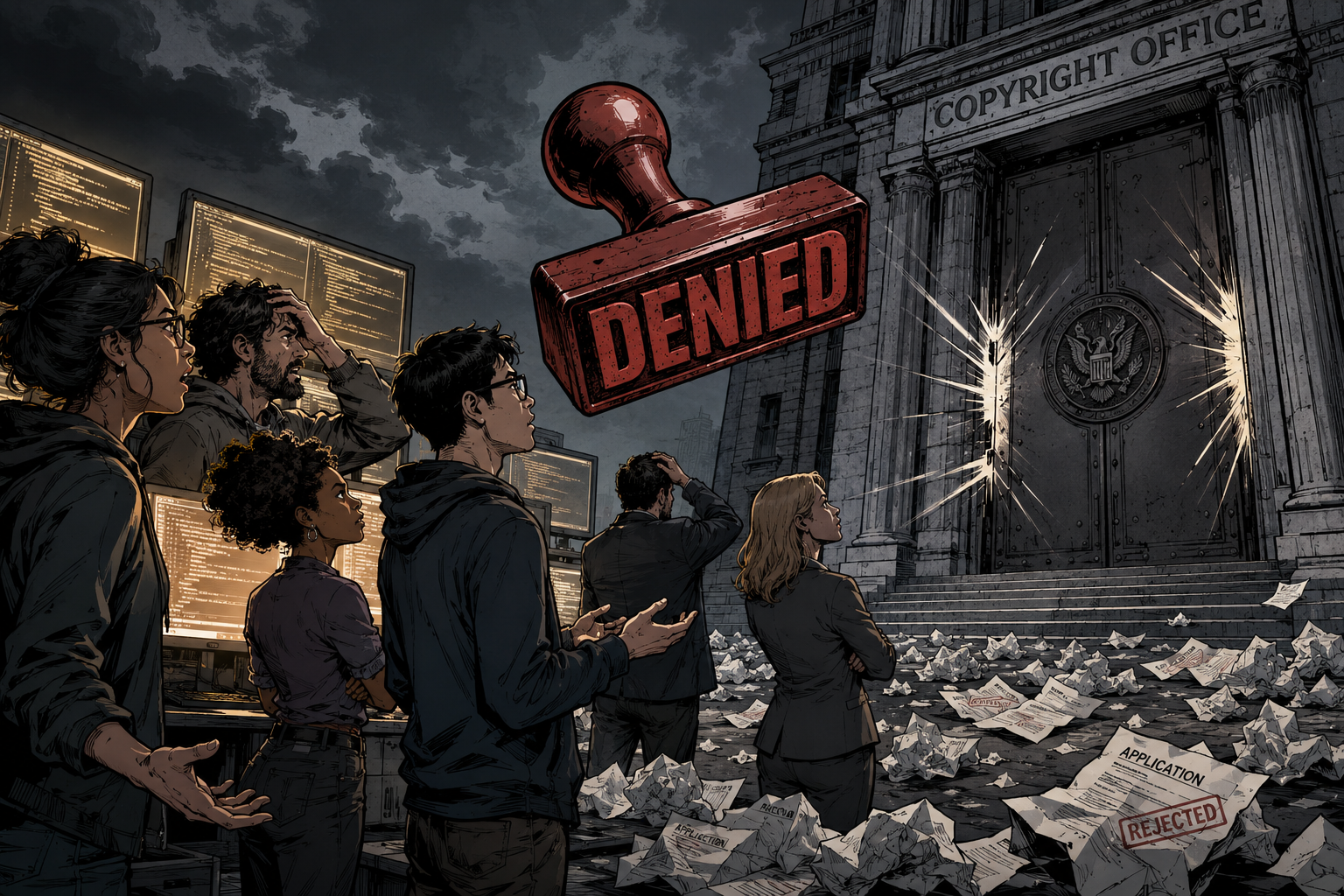
In 2024, I wrote that the Copyright Office's position on AI-generated works was flawed and would not survive contact with the actual Burrow-Giles test. Three years later, the Office has hardened that position into formal policy, the D.C. Circuit has blessed it, and the Supreme Court has refused to look at it. The reasoning is still wrong for the same reasons. What's new is who's paying for it: the AI-native founders building real businesses on tools the Office now tells them they can't own the output of — and a constitutional bargain that's being broken on both ends.

My Response to Roman Iospa’s opinion piece — entitled “This isn’t a trade war — it’s tough love to save the future”
In Roman Iospa’s opinion piece — titled “This isn’t a trade war — it’s tough love to save the future,” Iospa claims that the global trade system is “broken,” and that Trump’s tariffs are necessary to prepare for a future defined by automation. As it pertains to the U.S. economy, Iospa’s thesis rests on several highly speculative assumptions that are discussed here.

How Ukraine’s Lithium Reserves Could Determine the Future of AI and Energy Storage
With an estimated 500,000 tonnes of lithium, Ukraine's reserves are valued at approximately $15 trillion. Supporting Ukraine is not merely a matter of foreign policy but a strategic imperative for the United States. Ensuring U.S. access to critical minerals like lithium is essential for maintaining economic stability, advancing technological innovation, and preserving geopolitical influence.

The Misguided Stance of the Copyright Office on AI-Generated Works
The U.S. Copyright Office has taken the position that AI image generating tools, like MidJourney, (not the user using the tool) are the authors of the images that are created. The best example we have is the case of Kristina Kashtanova’s graphic novel, Zarya of the Dawn, which was partially generated using AI. The Copyright Office’s reasoning is flawed, and the issue of who the author is when using AI tools needs careful examination.